Dark Light

a brief history of cannabis

The cannabis plant goes back a long way in history and has had many usages over it’s time. Here is an overview of the history of the plant.

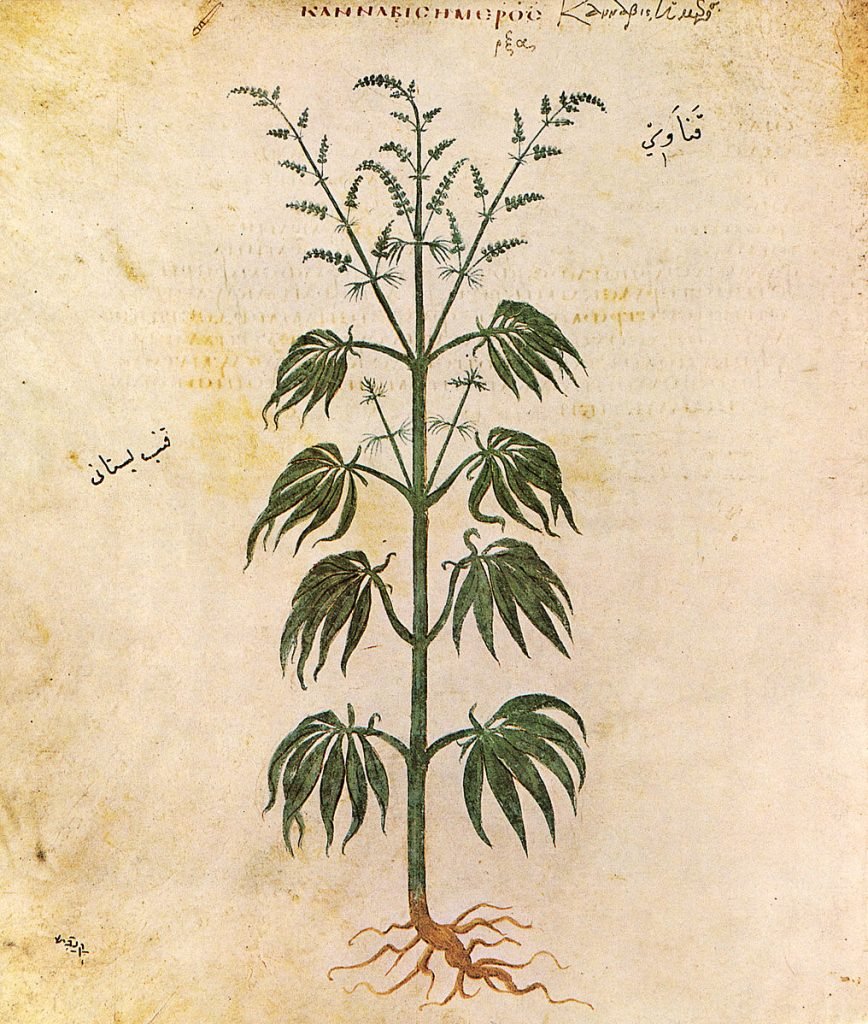
Illustration from the Vienna Dioscurides c.512
Illustration from the Vienna Dioscurides c.512 (public domain)
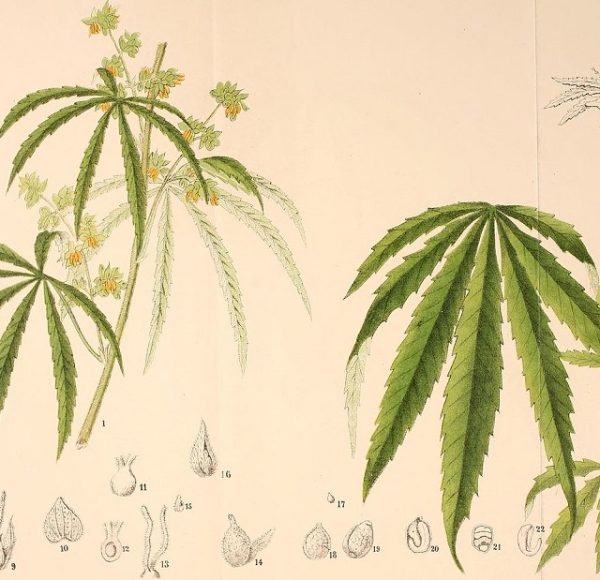
Guide to American plants used as homopathic remedies 1887
Guide to American plants used as homopathic remedies 1887 (public domain)

where it all started...

The history of cannabis stretches back thousands of years, making it one of humanity’s oldest cultivated plants.

Some of the earliest documented references come from ancient China, where historical records attribute medicinal uses of cannabis, known as “Ma,” to around 2900 BC during the reign of Emperor Fu Xi. Archaeological discoveries have also uncovered pottery decorated with hemp patterns dating back more than 10,000 years, highlighting the plant’s importance to some of the world’s earliest agricultural communities.

For much of early history, cannabis appears to have been valued primarily as a practical crop rather than an intoxicant. Hemp fibres were widely used to produce rope, cloth, paper and other everyday materials, while the seeds provided a nutritious food source. Even so, archaeological evidence indicates that ancient cultures were familiar with the plant’s psychoactive properties. Burnt cannabis seeds discovered in burial sites belonging to shamans in regions of western China and Siberia, dating to approximately 500 BC, suggest the plant played a ceremonial or spiritual role in certain societies.

The ancient Scythians, nomadic tribes who occupied parts of the Eurasian Steppe and Siberia from around the 7th century BC, are also closely associated with early cannabis use. Historical accounts and archaeological findings indicate they burned cannabis during funeral ceremonies and other ritual gatherings, producing aromatic smoke that was believed to accompany spiritual practices. Beyond its ceremonial significance, cannabis was also likely used for relaxation and traditional healing, reinforcing its long-standing role as both a practical resource and a culturally important plant throughout ancient history.

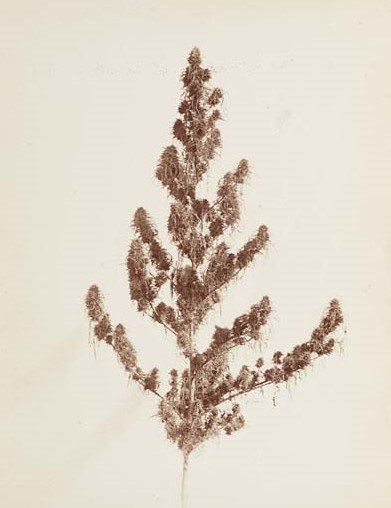
Ganja plant ready for cutting 1894
Ganja plant ready for cutting 1894 - NLS (CC) license
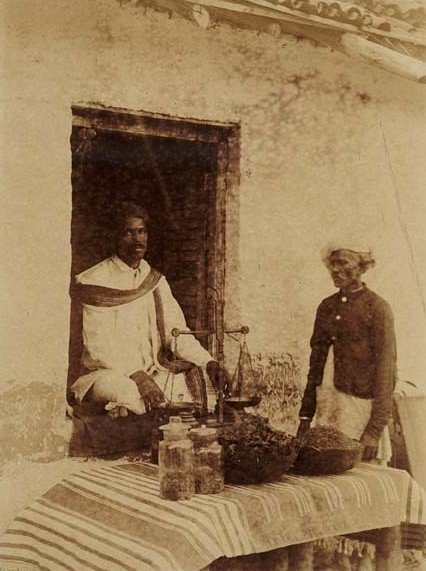
A hemp drug shop in Kandesh, India 1894, displaying bhang, ganja and majum
A hemp drug shop in Kandesh, India 1894, displaying bhang, ganja and majum - NLS (CC) license

cannabis spreads worldwide

From central Asia, the use of cannabis then spread to India, Europe, the Middle East, Africa and then to the Americas.

As trade routes expanded and civilizations interacted, cannabis gradually spread far beyond its origins in Central Asia. Over many centuries, the plant travelled east into Korea and India before reaching the Middle East, Europe, Africa and, much later, the Americas. Each region developed its own unique relationship with cannabis, using it for medicine, fibre, food, religious ceremonies and practical everyday purposes.

By around 2000 BC, hemp cultivation had reached the Korean Peninsula, most likely through exchanges with neighbouring regions of China. From there, cultivation continued to spread throughout East and South Asia. During this period, cannabis also became deeply woven into Indian culture. Ancient Hindu scriptures known as the Vedas, believed to have been composed between approximately 2000 and 1400 BC, contain references to cannabis and its spiritual significance. In Hindu tradition, the plant was associated with sacred rituals and was regarded as a gift with divine connections, earning an enduring place in religious ceremonies that continues in some communities today.

As centuries passed, hemp became an increasingly valuable agricultural crop across Europe. Historical records indicate that Viking societies relied on durable hemp fibres to manufacture ropes and rigging for their ships, while medieval Italian shipbuilders used hemp extensively in the production of sails and other maritime equipment. By the Middle Ages, cannabis cultivation had become established throughout much of Europe, including Great Britain, where hemp was widely grown for industrial purposes. At the same time, trade and migration helped introduce the plant across Africa and eventually into the Americas, setting the foundation for cannabis to become one of the world’s most widely distributed cultivated plants.

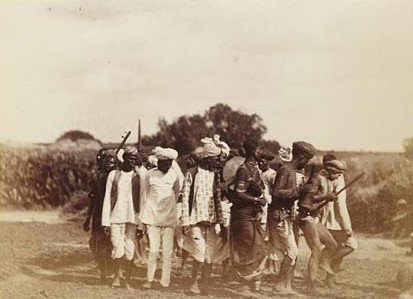
Men treading ganja in Ahmednagar, India 1893
Men treading ganja in Ahmednagar, India 1893 - NLS (CC) license
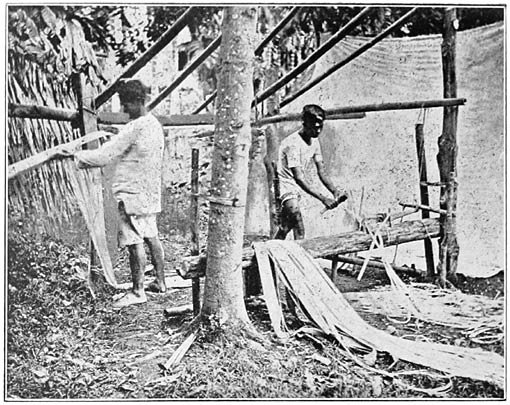
preparing Hemp -Drawing out the fibre (c. 1900, Philippines)
Preparing Hemp -drawing out the fibre - c. 1900, Philippines (public domain)

how the cannabis plant was used

As the usefulness of hemp became widely recognised, many governments actively encouraged its cultivation. Throughout Europe, hemp was considered an essential industrial crop thanks to its strong fibres, which were used to produce rope, canvas, clothing, paper and other everyday materials. In England, legislation introduced during the reign of King Henry VIII in 1533 required many landowners to grow hemp to support the nation’s expanding maritime and manufacturing industries.

Scientific understanding of the cannabis plant also advanced during the eighteenth century. In 1753, the Swedish botanist Carolus Linnaeus formally described Cannabis sativa in his botanical classification system. Later researchers would distinguish additional varieties, including Cannabis indica, which remains one of the primary cannabis classifications recognised today. Around the same period, hemp arrived with the First Fleet to Australia in 1788, where it was cultivated as an important agricultural crop for fibre production and other practical uses during the early colonial years.

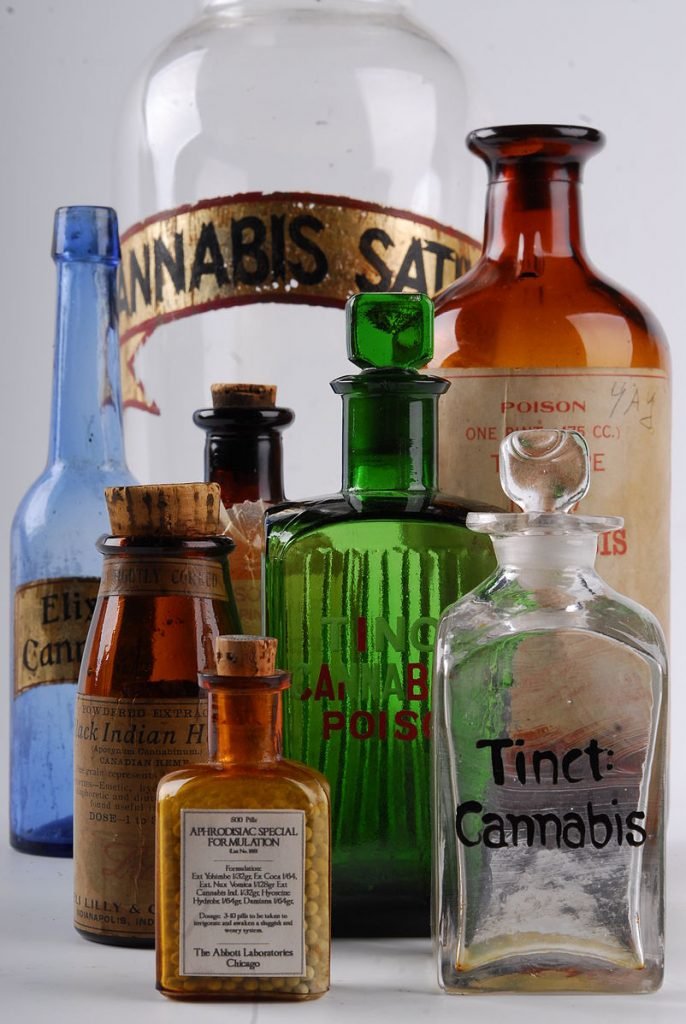
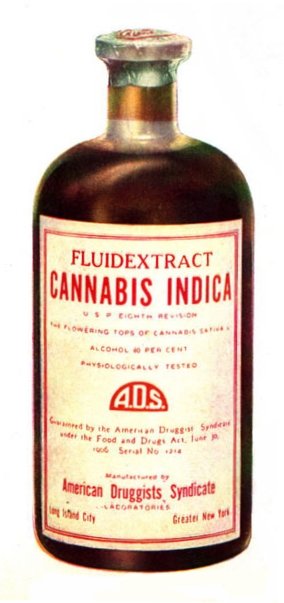
By the nineteenth century, cannabis had spread throughout much of the world, including the Caribbean. Medical interest in the plant also grew significantly. During the 1830s, Irish physician Sir William Brooke O’Shaughnessy documented the therapeutic effects of cannabis while working in India. His research suggested that cannabis preparations could help relieve pain, muscle spasms and severe nausea, including symptoms experienced by cholera patients. These findings attracted international attention, and by the late 1800s cannabis tinctures and extracts were commonly stocked by pharmacies in the United States and Europe as treatments for a variety of medical conditions, particularly digestive complaints, pain and sleep disorders.

Nineteenth_century_medicine_bottles_in_display_in_the_Hash_Marihuana_&_Hemp_Museum_in_Amsterdam
Nineteenth century medicine bottles (public domain)
Drug_bottle_containing_cannabis
Drug bottle containing cannabis (public domain)

views on cannabis start to change

The early twentieth century marked a significant shift in how governments approached cannabis. In the United States, the Pure Food and Drug Act of 1906 introduced stricter requirements for the labelling of medicines containing cannabis, alongside substances such as alcohol, opiates and cocaine. While the Act did not prohibit cannabis, it represented one of the first major federal regulations governing its sale and distribution. During the same period, the upheaval of the Mexican Revolution (1910–1920) contributed to the wider movement of cannabis into parts of the United States, where recreational use became increasingly visible in some communities.

Public attitudes towards cannabis changed considerably throughout the first half of the twentieth century. What had previously been viewed largely as a medicinal or industrial plant gradually became associated with social fears, immigration and criminal activity. Beginning with Utah in 1915, a growing number of U.S. states introduced laws restricting or prohibiting personal cannabis use, and by the early 1940s most states had enacted similar legislation. In the United Kingdom, cannabis was brought under tighter legal controls through the Dangerous Drugs Act 1928, reflecting an international trend toward prohibition.

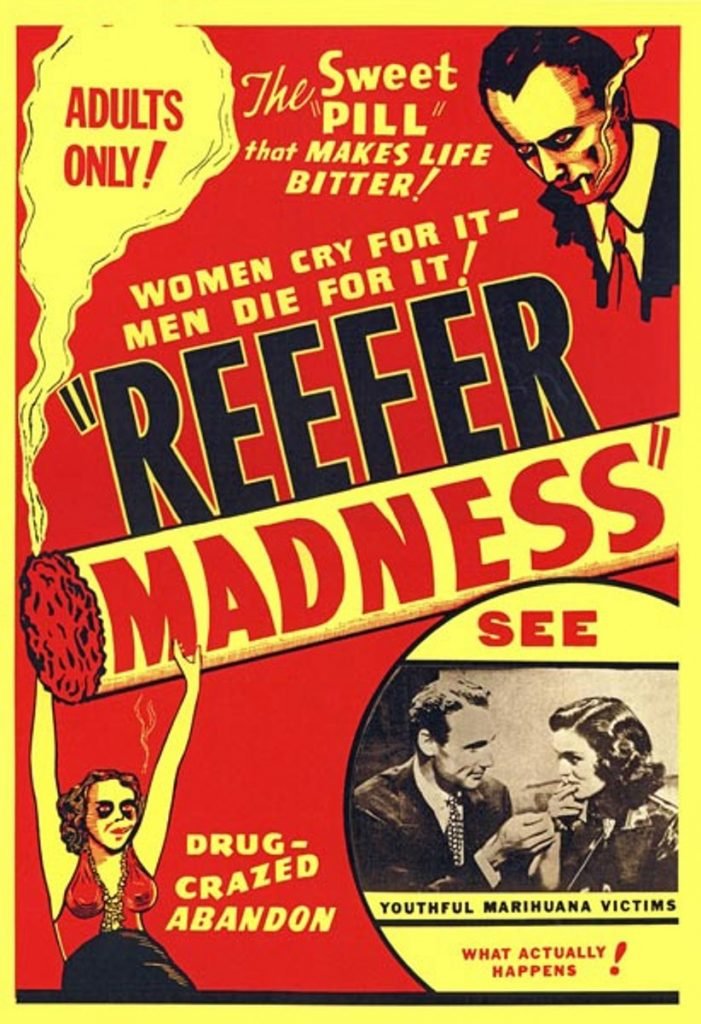
The period also saw widespread anti-cannabis campaigns that fuelled public concern through sensationalised media and propaganda. Some publications and films exaggerated the effects of cannabis, often relying on racial stereotypes and misinformation that are now recognised as inaccurate and discriminatory. One of the most well-known examples was the 1936 film Reefer Madness, which portrayed cannabis use in an alarmist and fictionalised manner. Following the International Opium Convention in Geneva during the 1920s, many governments introduced increasingly restrictive cannabis laws, and by the mid-twentieth century prohibition had become common across much of the world.

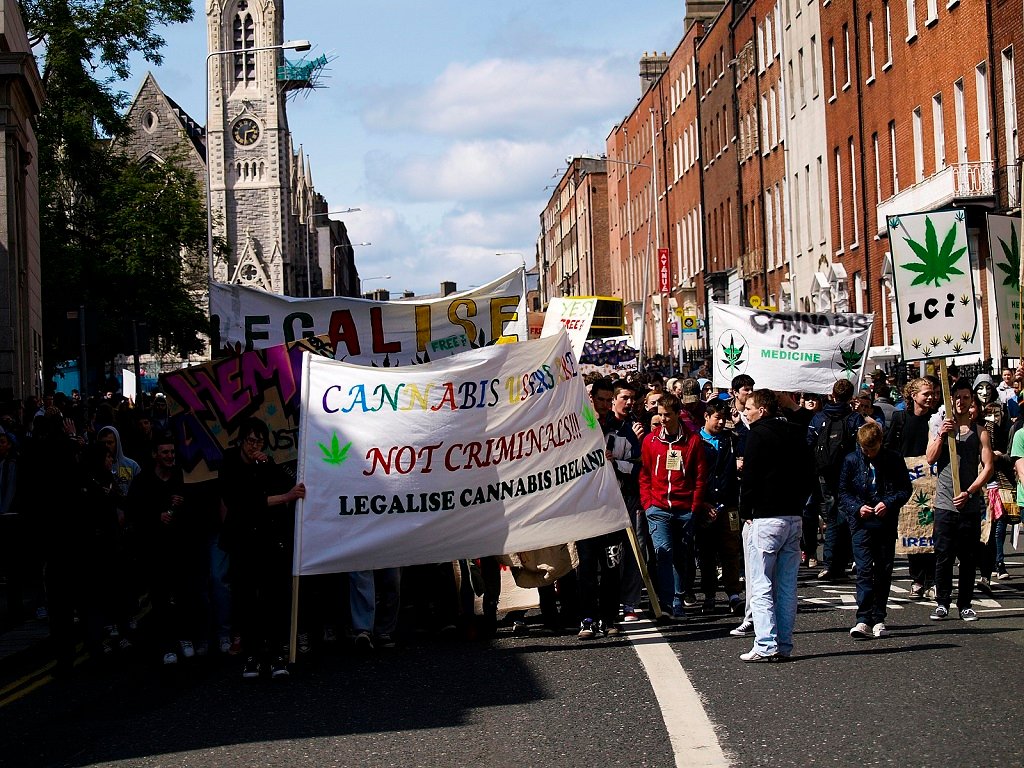
Despite these legal restrictions, recreational cannabis use expanded rapidly during the 1960s as part of broader cultural and social movements. In the United States, some military personnel serving during the Vietnam War reported using cannabis as a way to relax and cope with the stresses of conflict, while civilian use also increased among younger generations. In Australia, cannabis gained greater public attention during the same era. One notable event occurred in 1964, when extensive stands of wild hemp were discovered in the Hunter Valley region of New South Wales. The discovery attracted widespread interest, with groups of enthusiasts travelling to the area in search of the towering plants, which had become well known for their psychoactive characteristics.

Reefer_Madness_(1936) poster
Reefer_Madness 1936 poster (public domain)
Legalise Cannabis March Dublin Ireland, 2012
Legalise Cannabis March Dublin Ireland, 2012 (public domain)

medical benefits explored further

The medical benefits of cannabis were slowly starting to be discovered and explored and Canada became the first country in 2001, to legalise medical marijuana. Jump to 2012 and cannabis became legal in Colorado and Washington, USA for recreational use (with many states now following suit). It still remained illegal in Australia, although interest in hemp seeds was increasing. More health food products selling hemp were introduced, as well as products like hemp shampoos and soap bars.

today

As at 2026, it’s hard to keep track of which countries worldwide have legalized vs decriminalized Cannabis, but the trend is most certainly in favor of legalization.  It seems like it is only a matter of time that Cannabis will be treated similar to Alcohol with all the relevant taxation, education and regulations.

Australia legalized medicinal cannabis at the federal level and from January 2020, the Australia Capital Territory stated it was now legal to possess small amounts of cannabis for personal use (even though this conflicted with the federal laws).   Now, over 21 countries worldwide have began to decriminalise cannabis with this number steadily growing year over year.   

Further Reading

About the author:

As a passionate gardener and advocate for self sufficiency and food security, CG aims for moderation and reverence of Cannabis as an ancient and powerful natural medicine.  As the taboo steadily lifts worldwide, we’re here to help responsible, law abiding adults to experience the joy and wonder of nurturing a tiny seed from humble germination to bountiful harvest.

Related Content